The high-tech incubator has reached an 85% occupancy rate in its first seven months of operation and has established itself as a leader in retaining scientific talent.
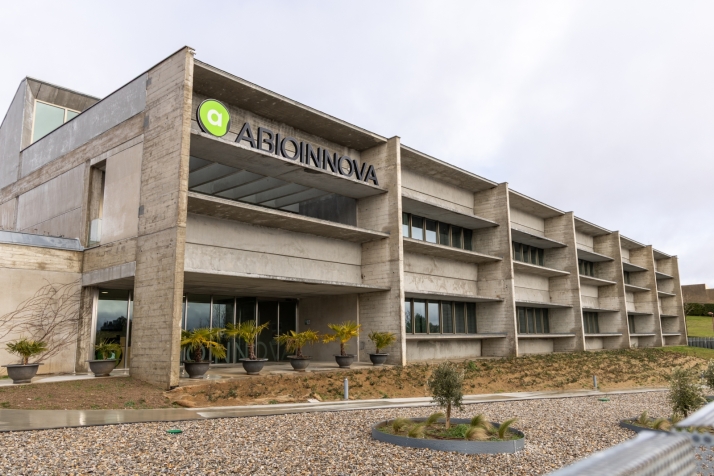
The high-tech incubator has reached 85% occupancy in its first seven months of operation and has established itself as a leader in retaining scientific talent. The innovation landscape in Salamanca is undergoing rapid transformation. Abioinnova, the technology hub promoted by the City of Salamanca, has surpassed even its promoters’ most optimistic expectations in just seven months. What began as a strategic initiative to integrate science, entrepreneurship, and health has now become a tangible reality operating at nearly full capacity.
Pedro Martínez, Councilor for Economic Promotion, Commerce, Markets, and Youth, provided SALAMANCArtv AL DÍA with a comprehensive assessment of this initial period of activity. The data speaks for itself: the center currently houses 18 companies, representing 85% occupancy of the available space. This figure not only validates the need for such an infrastructure in the city but also confirms the existence of a latent entrepreneurial ecosystem in the biotech sector that required a catalyst to take off.
The infrastructure, a key component of the Salamanca Tech strategy, is more than just a collection of offices and laboratories. As the initial results show, its mission is to transform academic research into market value, generating wealth and high-skilled jobs in the capital of the Tormes region.
A call for proposals that exceeded expectations
The response from the biotechnology sector has been immediate and growing. As Pedro Martínez explained, the trend in applications reflects strong confidence in the project. “Honestly, it has exceeded expectations, because we didn’t expect it to be this successful,” the councilman acknowledged.
In the first call for proposals, launched when the service was still new, eight business projects were submitted. Seven months later, in the second call, the number rose to ten new initiatives. This increase demonstrates that the project conveys “confidence, security, and reliability” to entrepreneurs and researchers, who see Abioinnova as the ideal environment for developing their activities.
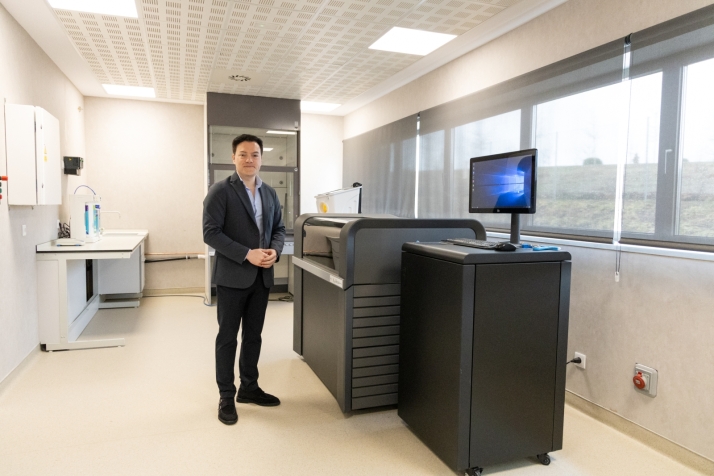
Currently, available physical space is limited, with just under 20% of the facilities remaining vacant. However, the incubator’s management model allows new companies to join the ecosystem by requesting only advanced services, without needing to occupy a permanent office or laboratory, which extends the initiative’s reach beyond the building’s walls.
ViroFend: Hope Against Colon Cancer ‘Made in Salamanca’
Among the 18 projects already operating at the center, one stands out for its potential global impact and its purely Salamanca-based origins. This is ViroFend, a biotechnology company that is developing a significant breakthrough in the fight against cancer. As revealed by Pedro Martínez, the company is close to beginning clinical trials for a treatment against colon cancer.
The story of ViroFend is a prime example of what the Salamanca Tech ecosystem seeks to achieve. The company was founded during the first edition of the Salamanca Tech Summit in 2024. Its two founders, Miguel Ángel Ávila and Sara Cuadrado (the latter a resident of New York for 13 years), did not know each other beforehand despite both being from Salamanca. It was the technology event that brought them together and led to the subsequent creation of the company.
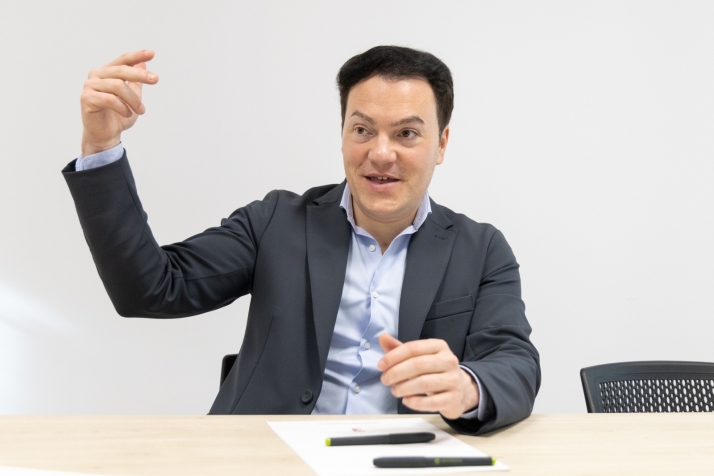
“We may have some very good news coming out of Salamanca regarding a new drug to treat colon cancer,” the councilman said cautiously but optimistically. The research, which is four to five years ahead of similar studies, has shown promising results in preclinical trials (mice). If its success is confirmed in the next phases, this “would position the city on an international level,” comparable to the impact of recent major biomedical milestones.
Currently, ViroFend has a staff of between 15 and 20 employees and continues to grow and consolidate within the municipal facilities.
Talent Retention: From the Classroom to the Workplace
One of Abioinnova’s founding objectives is to stem the brain drain and offer real opportunities to graduates of Salamanca’s universities. The strategy involves turning the “Salamanca City of Talent” brand into concrete personal stories.
Pedro Martínez illustrated this success with the case of a student from Toledo who came to Salamanca to pursue a master’s degree in biotechnology and, thanks to the opportunities created by the incubator, has decided to establish her professional career in the city. “We want that identity to take root and be brought to life through people, not just infrastructure,” the councilman stated.
Abioinnova’s user base is diverse. On the one hand, there are recent graduates finding their first skilled job. On the other hand, there are spin-offs or knowledge-based companies that have emerged directly from research groups at the University of Salamanca. In this regard, there are already two cases of university professors who have taken the step of establishing their projects as companies within the incubator, thereby transferring the results of their research to the real market.
More than just a building: advanced services and networking
What sets Abioinnova apart from other conventional incubators is its portfolio of advanced services and its ability to connect with the ecosystem. The City Council does not limit itself to providing space; it offers comprehensive support that includes:
Funding search: Guidance on accessing funds from entities such as the CDTI (Center for Technological Development and Innovation), whose representatives recently visited the facilities.
Access to healthcare infrastructure: Facilitating direct contact with the University Hospital of Salamanca, the IBSAL (Salamanca Institute of Biomedical Research), or the Cancer Research Center for testing or collaborations.
Visibility and marketing: Participation in leading trade shows such as Transfiere in Málaga, where the City Council attends as an institution and invites the hosted companies to enhance their exposure.
This “network effect” is vital for startups. “Without trust, investments don’t work,” explains Martínez. The City Council’s institutional backing provides the necessary layer of security for investors and partners to trust nascent projects. Additionally, internal networking is encouraged, allowing companies to share contacts and experiences, thereby accelerating their learning curve.
Roadmap: Toward the Technology District
Abioinnova is just one piece of a much larger plan that the City of Salamanca is rolling out in phases. The medium- and long-term vision is clear: to retain companies once they have moved beyond the incubation stage.
When projects mature and need to scale up their production or workforce, the city has set aside spaces to prevent them from relocating. The councilman highlighted the development of industrial land in the Puerto Seco for companies requiring industrial production facilities, and the future Technology District for those needing larger-scale offices and laboratories.

The timeline for new innovation infrastructure is ambitious and includes specific deadlines. The first major project, scheduled for completion in a year, will be the opening of the Ciudad del Talento center in the Chamberí neighborhood, which will repurpose the building that formerly housed the Lazarillo youth hostel. This network of facilities will expand in the short term with the opening of the new Garrido Youth Center, designed to also function as an innovation hub, while the strategy will culminate in the medium term—within four to five years—with the definitive consolidation of Salamanca’s new technology district.
The ultimate goal is to create an ecosystem so robust and interconnected—with the university, the hospital, and the local government—that it will be “very difficult to replicate in another city,” thereby ensuring that the added value generated by companies like ViroFend and the other 17 current firms remains in Salamanca.
The next key event to gauge the pulse of this ecosystem will be April 15, the date of the upcoming Salamanca Tech Summit, a showcase where these companies will be able to present their progress to the public and potential international investors.